Microchipping your Labradoodle
|
|
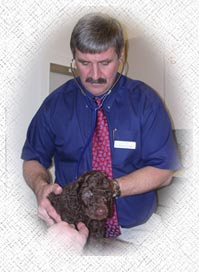
Dr. Schmidt caring for our
Australian Labradoodle Puppies |
One of the most important aspects of being a responsible pet owner, includes microchipping of your dog. We hope our pets never wander off or escape our care, however, it can happen. We therefore have our puppies microchipped at the time they receive their first vaccinations.
Other forms of identification include tattoos which can lighten or become distorted and other type of tags can fall off. Microchipping is permanent so it is the preferred method of indentification. It is very reassuring that research facilities will not take any dog that has either a microchip implanted or a tattoo. Although there are no guarantees if your pet is lost they will be returned, having had your puppy microchipped, certainly does increase the chances. If the dog were unfortunately lost and brought to a veterinarian's office or to a shelter with a scanner, that particular facility can check the dog for microchip identification. The folks at the vet's office or shelter would call a national pet database and then contact you as the owner.
|
|
|
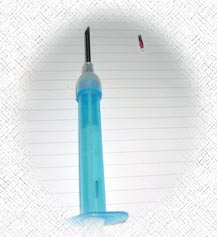
Microchip for puppies |
The microchip itself is approximately the size of a grain of rice and contains a digital number specific only to that particular dog. It is implanted under the flap of skin on the back of the dog's neck between the shoulder blades. The microchip is scanned (much like one scans bar codes in a grocery store) to be sure it is properly placed. The procedure is done very quickly and puppies tolerate it very well. As far as any discomfort being involved, we liken it to them receiving their vaccinations.
When you receive your puppy, we will give you an important form to fill in and send for microchipping registration.
|
|
|
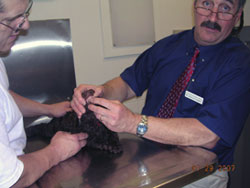
Dr. Schmidt caring for our
Australian Labradoodle Puppies |
|
 |
|
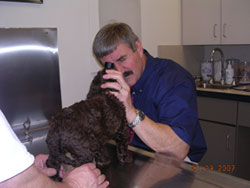
Examining Labradoodle Puppies |
|
|